IMSI

Comparing the remnants of the Cenerian orogen in Austria and Serbia

About project

Project title:

Comparing the remnants of the Cenerian orogen in Austria and Serbia

Acronym:

N/A

Financier:

Ministry of Science, Technological Development, and Innovation

Budget:

4000 EUR as maximum expense reimbursemenet for the team in Serbia

Project duration:

2024-2026

Project coordinator:

Dr Bojan Kostić, Faculty of Mining & Geology, Belgrade

Партнери на пројекту:

Faculty of Mining and Geology, Institute of Chemistry, Technology and Metallurgy (IHTM), University of Salzburg

Project leader for IMSI:

Darko Spahić,
Senior Research Fellow

Project website:

N/A

Social media:

N/A

Location:

Salzburg – Belgrade

Keywords:

Lower Paleozoic tectonics, Cenerian orogeny, Intra-Ordovician event, Eastern Serbia, Carpathian-Balkan fold-and-thrust belt.
Senior Research Fellow

Telephone:

E-Mail:

Website:

Linkage to the Global Sustainable Development Goals (SDGs)

Project description

Until recently, the Ordovician accretionary stages were barely recognized and attributed to a “North African Caledonian event” (Romanian Carpathians). By using zircon crystallization ages in orthogneiss, Ordovician magmatic imprints are recognized across the area. The metamorphic basement units of Central Europe, including Eastern Serbia, frequently contain traces of discrete magmatic and/or metamorphic events of the Ediacaran-Ordovician age. Most puzzling and presently little understood is a discrete Ordovician tectonothermal event with, at least in places, clear subduction-type metamorphic characteristics. Despite this atypical “Cenerian orogenic event” and the absence of typifying crustal thickening, the crustal tectonothermal deformations are repeatedly observable within and south of the Alpine-Carpathian-Balkan-Hellenic chain. The project has been based upon U-Pb zircon dating of some key rocks (mainly detrital zircon provenience studies, which are an important tool for paleogeographic reconstructions). It will be carried out at the University of Graz.

Data:

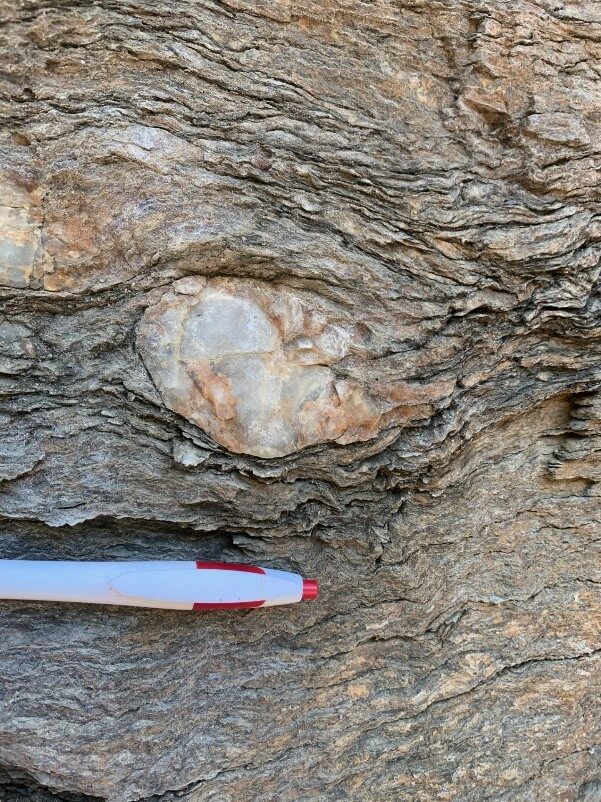
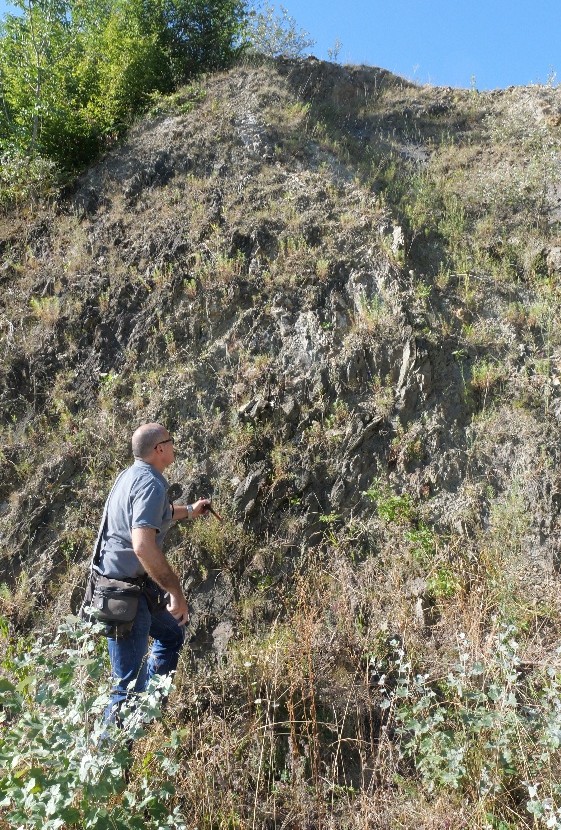
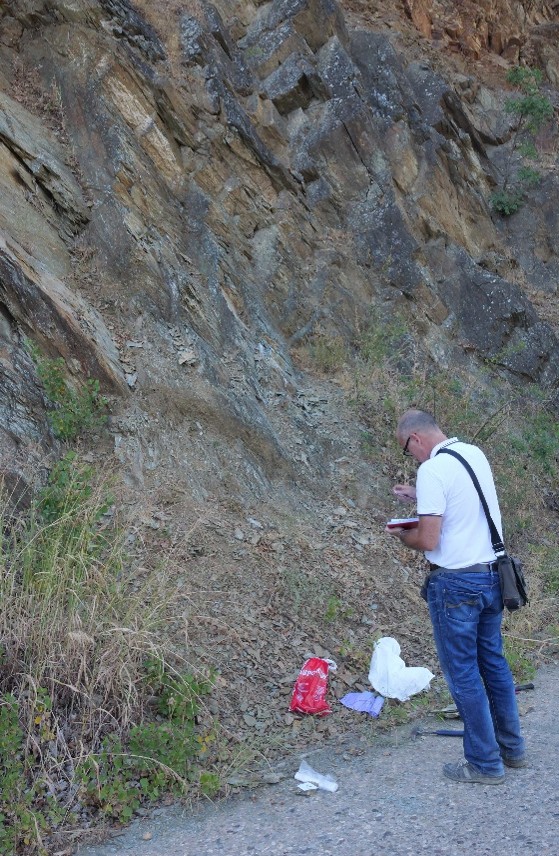
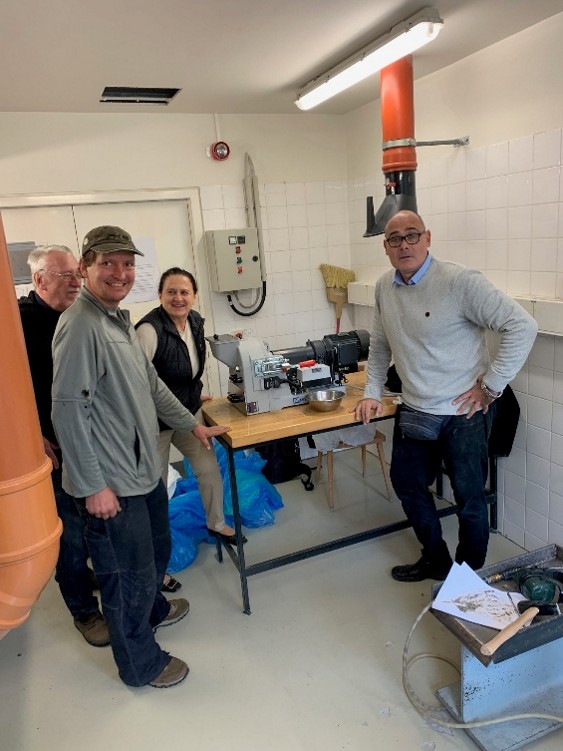
To achieve project and study goals, we collected over 20 samples during 2024 from the east Serbian meta-sediments of Lower Paleozoic age. The zircons were extracted at the Faculty of Mining and Geology and in Salzburg labs. After extraction, the absolute age of the zircons will be determined at the University of Graz.

Results:

Available publications:

Photos

Publications until August 2025Category

Spahić, D., Milovanović, D., Kurešević, L., Kostić, B., Tančić, P., (2025). Reconstruction of the enigmatic pre-Variscan paleogeographic configuration of the western peri-Moesian realm (Carpathian-Balkans, eastern Serbia): An insight into Devonian small-scale continental and paleo-oceanic units. Earth-Science Reviews. https://doi.org/10.1016/j.earscirev.2025.105227

IF 2023 10,3

M21a+

(20)

Spahić, D., Cocco, F., & Tančić, P. (2024). The far-field interplay between peripheral Cenerian Orogeny and inner north Gondwanan hinterland: Cambro-Ordovician siliciclastic veneer and pre-Hirnantian unconformities (Sahara, central Libya). Earth-Science Reviews, 104952. https://doi.org/10.1016/j.earscirev.2024.104952

IF 2023 10,3

M21a+

(20)

Spahić, D., Radović, M., Blagojević, D., Tanasković, Lj., Jovanović, D., Vuković, S., (2025). “New evidence for Alpine overprint of poly-deformed gneisses in the ‘Median Dacides’ of SE Europe: Restoring polyphase deformations and transposition cycles. International Geology Review. https://doi.org/10.1080/00206814.2024.2397416

IF 2023 2,7

M21a

(12)

Project team

  • Project Leader (PI): Bojan Kostić, Docent, Darko Spahić, Senior Research Fellow
  • Team:
Dr..
Team BelgradeBojan KostićDr
Darko SpahićDr.
Pavle TančićDr.
Maja Poznanovic Spahić
Lidja KureševićDr
Team SalzburgFriedrich FingerProf.
Gertrude FriedlDr.
Christoph HauzenbergerProf
Christoph Von HagkeProf.
Veronika TenczerDr.

Linkage to the Global Sustainable Development Goals (SDGs)

  • Goals: 5, 9, 13
Global Sustainable Development Goals (SDGs):
  • Goal 1: No poverty
  • Goal 2: Eradicate hunger
  • Goal 3: Good health and well-being
  • Goal 4: Quality education
  • Goal 5: Gender equality
  • Goal 6: Clean water and sanitation
  • Goal 7: Affordable energy from clean sources
  • Goal 8: Decent work and economic growth
  • Goal 9: Industry, innovation and infrastructure
  • Goal 10: Reduce inequality
  • Goal 11: Sustainable cities and communities
  • Goal 12: Responsible consumption and production
  • Goal 13: Climate Action
  • Goal 14: Life underwater
  • Goal 15: Life on land
  • Goal 16: Peace, justice and strong institutions
  • Goal 17: Partnership for the Goals
Scroll to Top